
Journal · Case study · October 2026
Migros Play & Win: how a match-3 game held 5% of Switzerland for 12 weeks.
In the summer of 2024, roughly one in twenty people in Switzerland played a branded match-3 game. Not a download, not an app — a web game sitting inside the country’s largest retail loyalty programme. This is how we built it, and what the numbers looked like afterwards.
The client and the brief
Migros is Switzerland’s largest retailer, and its Cumulus loyalty programme touches a large share of the country’s households. The brief: build a mobile game that lives inside those existing loyalty touchpoints — the app, the coupons, the till — and keeps customers coming back through a twelve-week summer campaign. Three agencies shared the work: Mutabor, Apps with love, and Operal, who carried the game technology and the analytics.
Two constraints shaped everything. First, no download: the game had to run in the browser at national scale, on the phones people actually carry — more than 200 different mobile devices ended up on the compatibility list. Second, no dead air: a twelve-week campaign window means the game has to earn its place in the customer’s week every single week.
The game: match-3 with a loyalty spine
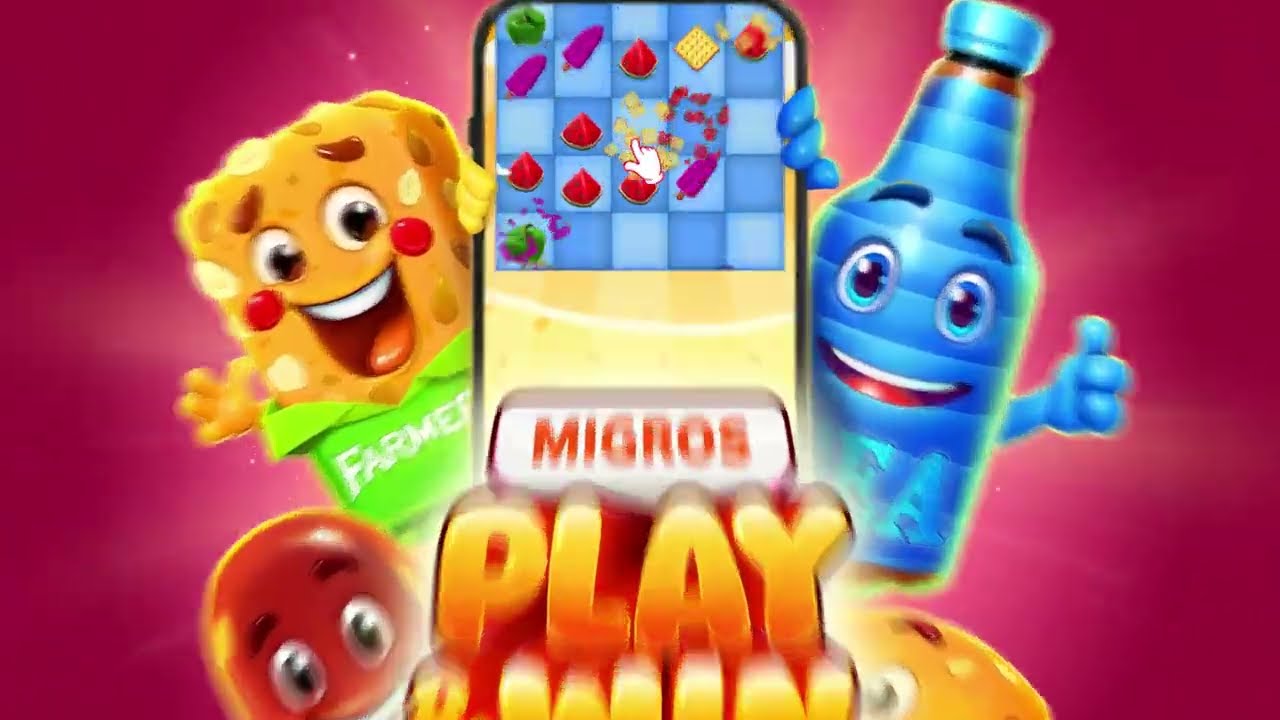
On the surface, Play & Win is the loop that has kept hundreds of millions of people tapping: swap, match, clear. The difference is what sits underneath it. Every CHF 10 of purchases earns a stamp. Eight stamps — or sixteen completed levels — earn a diamond, and a diamond buys a spin of the wheel of fortune. Play well and your odds of winning vouchers improve. The shop feeds the game, and the game feeds the next shop visit.
Around that spine we built the campaign machinery: serialised QR codes printed on product packs bridge the shelf to the board; Tell-a-Friend referrals carry in-game rewards for both sides; weekly prizes and more than 300,000 instant wins keep short-term hope alive; and the grand prize — a year of shopping, CHF 10,000 — gives the summer a destination. A self-learning algorithm steers game flow and coupon distribution in real time, so the campaign tuned itself while it ran.
The retention scaffolding sat one layer down: weekly and campaign-level rewards, leaderboards for the competitive, loyalty points redeemable for exclusive rewards, and newsletter activation woven into the progression — every mechanic had a reason to return attached to it, and none of them required leaving the game to participate.
The technology
The game client is Unity shipped to WebGL, so it boots in the browser with nothing to install. Behind it: a Java services layer, PostgreSQL for game state and campaign data, Kubernetes for orchestration, and Cloudflare in front. Everything is hosted in Switzerland — a hard requirement for a Swiss retailer handling loyalty data — and browser push notifications on Android and iOS bring lapsed players back without an app install.
Building for 200+ devices means treating the lowest-end Android as a first-class citizen. The art direction — the Farmer biscuit, the blue bottle, the chocolate ball as board characters — had to survive contact with a five-year-old mid-range phone, and did.
Rollout
The campaign went live in May 2024 and ran through the summer — twelve weeks in total, at win.migros.ch and inside the Migros app. The archived campaign page from June 2024 still shows the original pitch: win one of more than 300,000 prizes, collect stamps, play, win. When the campaign closed, the site folded back into migros.ch, as seasonal campaigns should.
Results
These are the figures approved for public use, reported from the campaign:
≈5%
of the Swiss population reached
~4
plays per user per day
14 min
average session time
Roughly 5% of Switzerland played, averaging four sessions a day of around fourteen minutes each, sustained across twelve weeks. Our founder’s summary of the summer: “Migros got 14 minutes a day for 12 weeks — no Instagram giveaway does that.” Those are habit numbers, not vanity numbers, and they are the standard we hold every subsequent game to.
What we learned
- Loyalty integration beats the app-store funnel. Meeting customers inside a programme they already use removed the two biggest drop-off points: the store page and the install.
- The economy is the game. Stamps, diamonds, wheels and odds were designed before the art, and tuned live by the algorithm — the match-3 board was almost the reward schedule made visible.
- Campaign games need a landing plan. Twelve weeks, then a clean close. The game, the prizes and the data all wound down on schedule — which is why the client could say yes again.
- National scale is a compatibility problem first. Budget for the oldest phone in the country, and the rest follows.
Editorial: operal.solutions blog.
Want a game that moves your metrics?
A match-3 for your loyalty programme, a prediction game for your next season — fixed scope, fixed budget, playable in weeks.