
12 · Case study
IMPERIUM
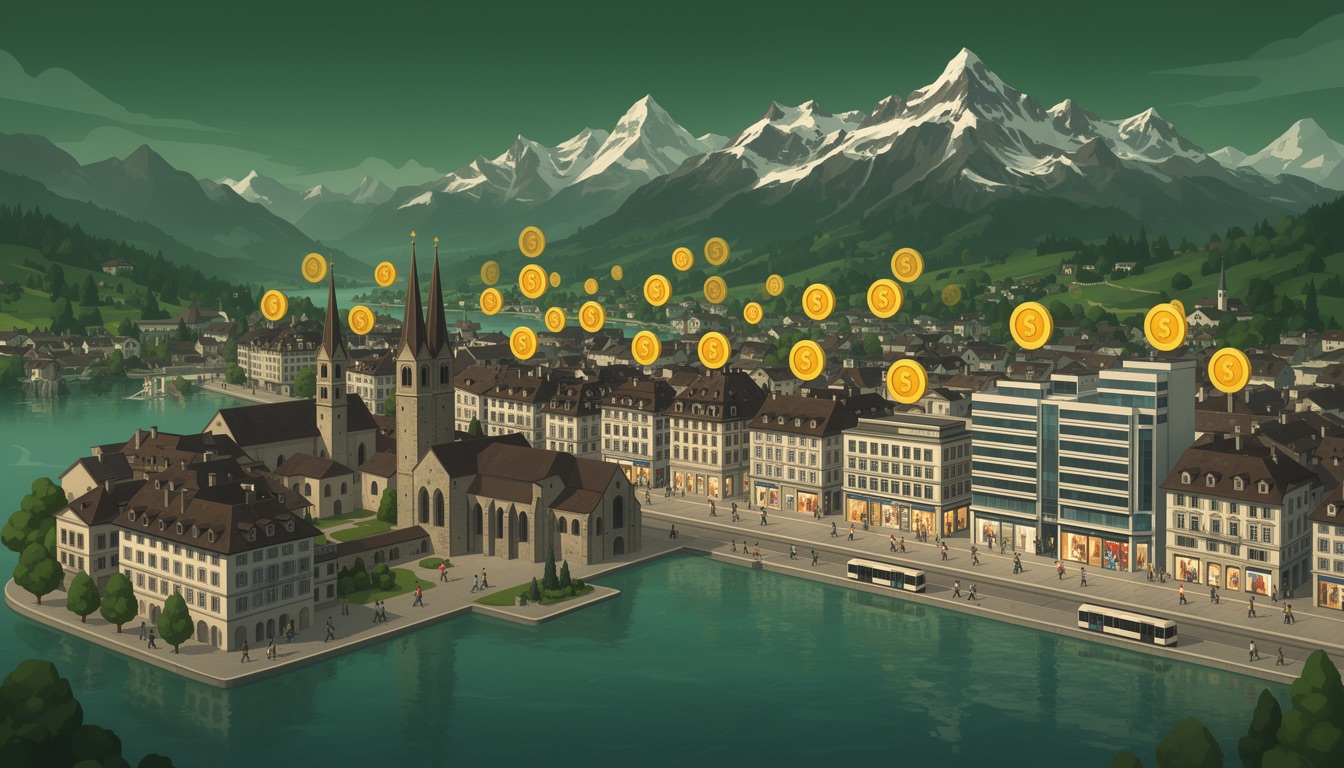
39,571
real cadastral parcels, live
130
automated assertions green at alpha
~1 s
trade-to-map repaint
~2 ms
to serve a 66 kB city tile
Challenge
What would a tycoon game look like if bots were a product feature, not a cheat? Operal's gaming department set out to build one on real-world land data — and to prove the anti-cheat and pay-to-win architecture on day one, grounded in precedents from EVE Online to Jagex v. iBot.
Approach
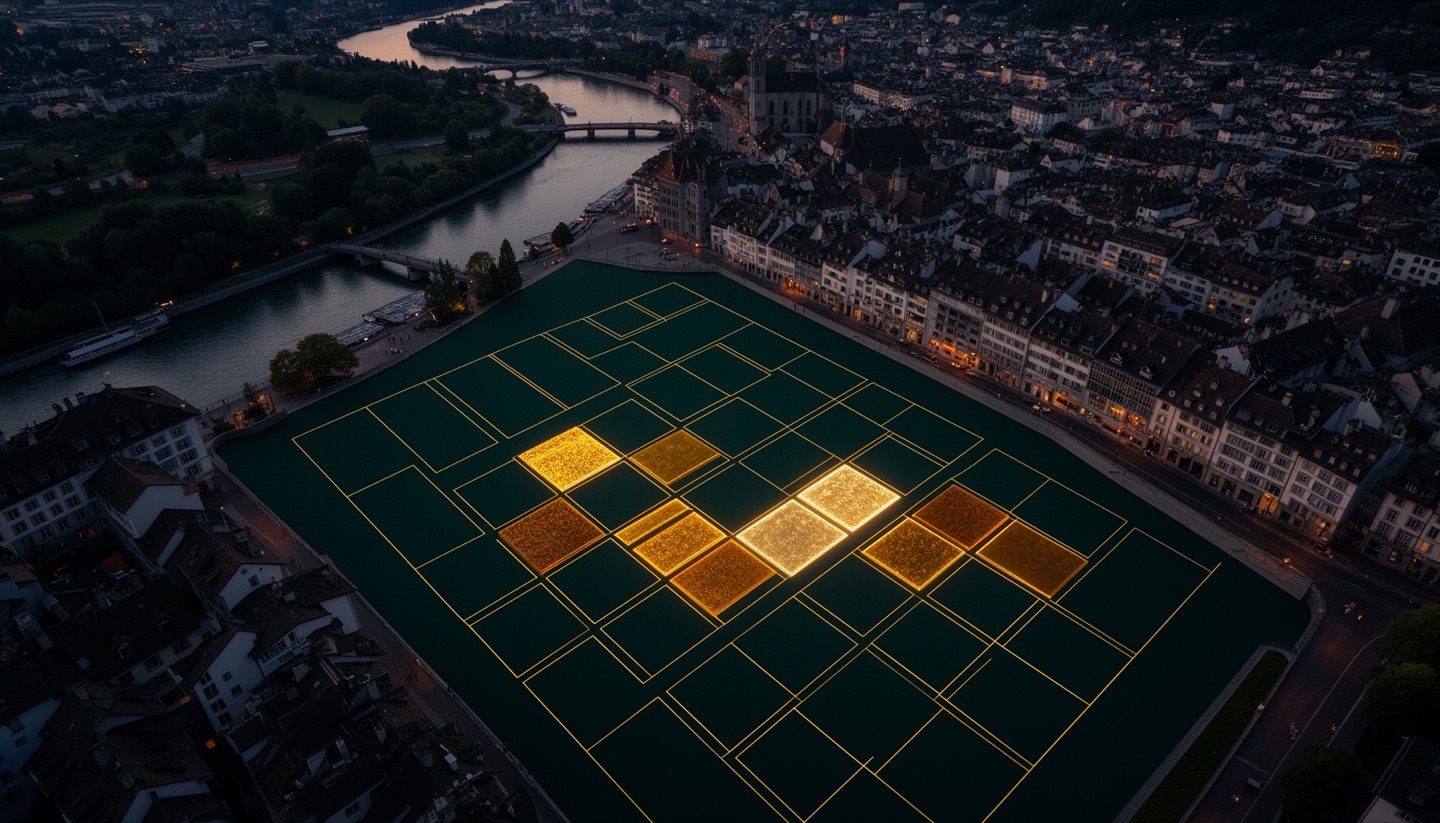
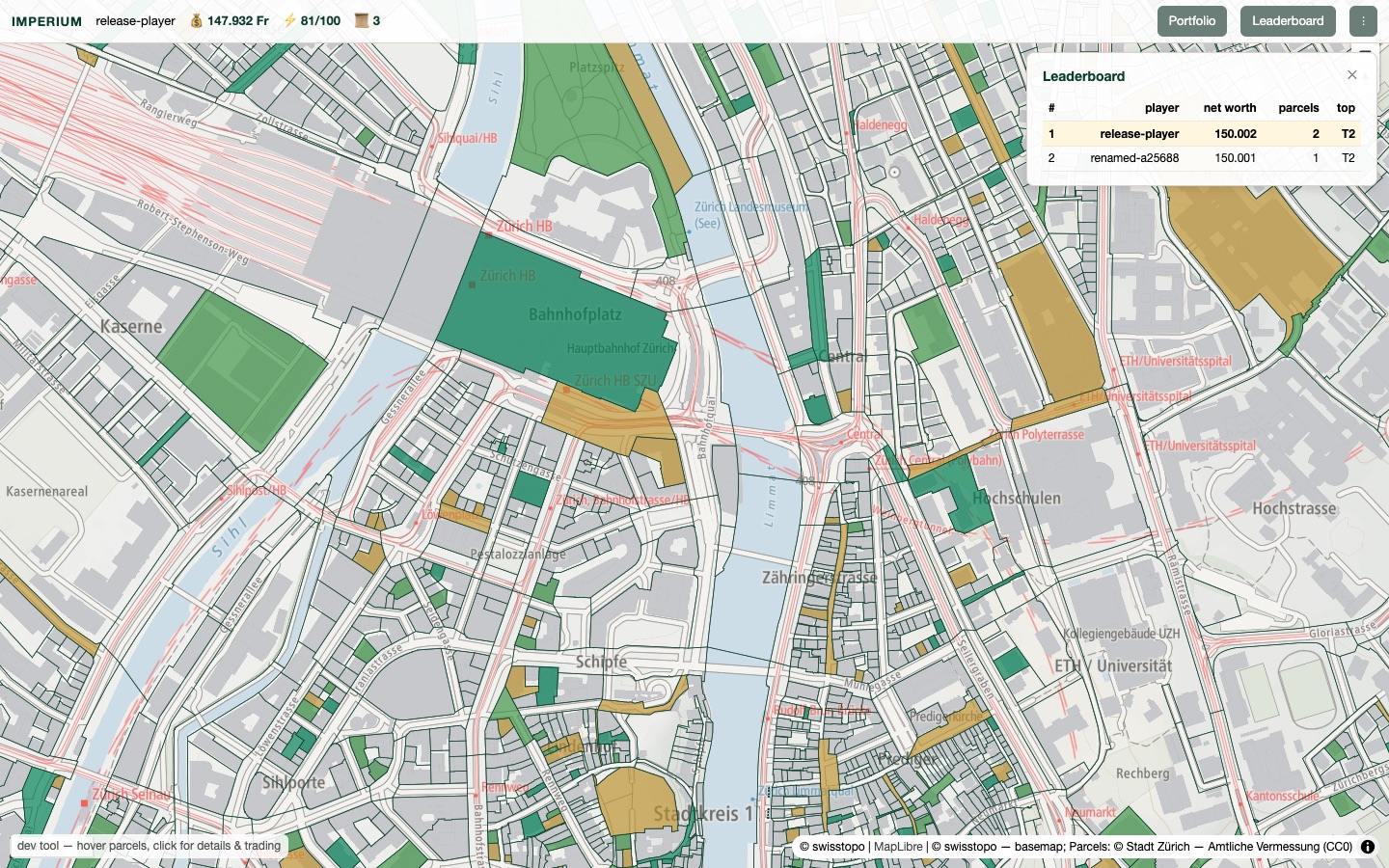
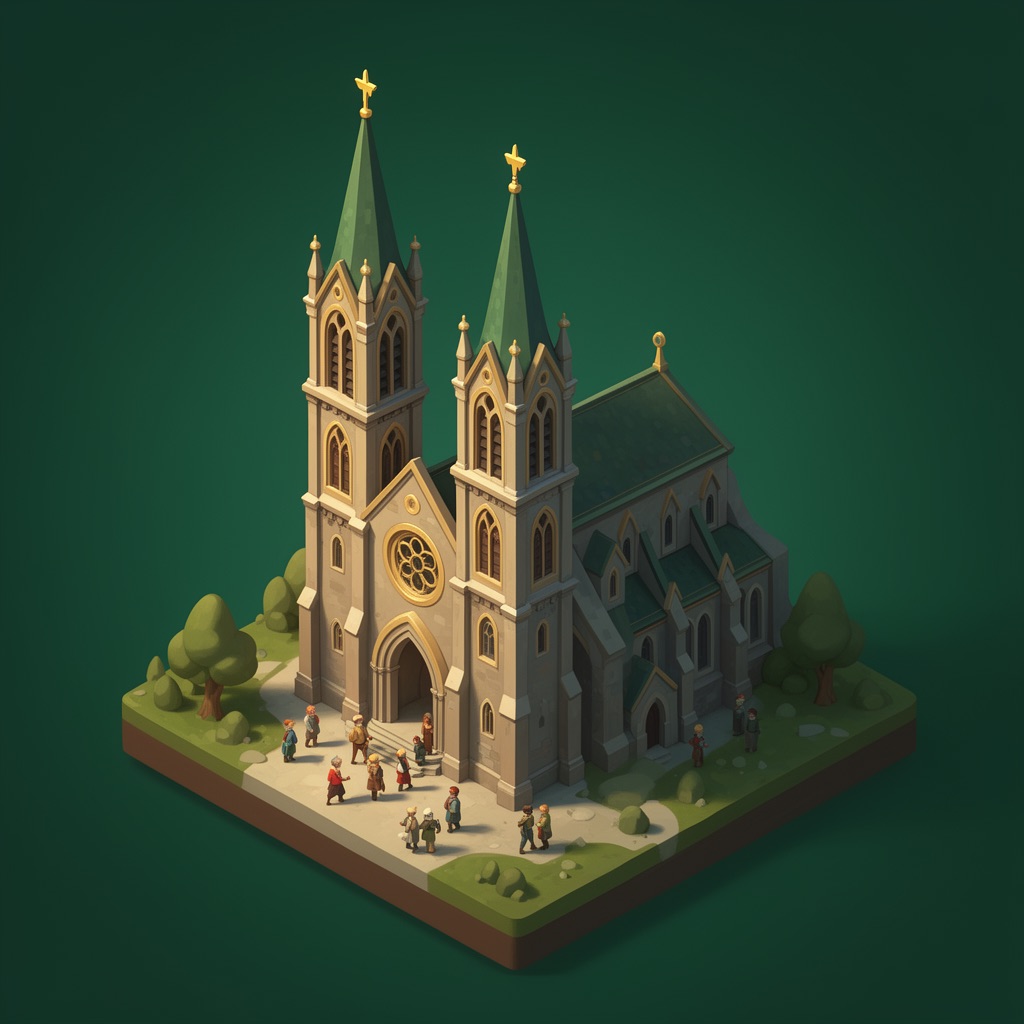
Every one of the 39,571 cadastral parcels the City of Zürich publishes (CC0) is claimable in the browser: buy, upgrade through five tiers, rent out at 6–12% per year, trade at a 15% tax and climb a live net-worth leaderboard. Humans and LLM agents play through the same governed API — scoped keys with quotas up to 6,000 RPM, kill switch, idempotency keys, full audit log; reads are free forever. Pay-to-win is throttled by design: an energy meter, deeds as simulated premium currency, the same constraints binding humans and bots. Trades repaint every open map in about a second via NATS and Centrifugo; Martin serves the whole city as 66 kB vector tiles; a scripted release player proved the loop end-to-end. The alpha shipped in a single overnight autonomous build on 10 October 2026.
Outcome
A playable, invite-gated alpha — 25 single-use invite codes minted for the human playtest — with 130 automated assertions green across five suites at release and a 24-month, gate-driven build plan underneath. Presented as first-party R&D: the honest way to ship a game economy.
Tech stack
- MapLibre GL
- PostGIS + Martin tiles
- Go economy core
- Go agent gateway
- NATS → Centrifugo
- Docker Compose
Gallery
Want the full story — funnels, budgets, live KPIs?
Request the full case study. Numbers, funnels and budgets — under NDA if needed.